
Dentures in Cambridge, MA
Choosing between full, partial, and implant-supported dentures is one of the most important decisions you can make for your smile. If you are exploring your options in Cambridge, this guide will help you understand each type clearly. Knowing full vs partial vs implant dentures — which one is right for you in Cambridge — starts with understanding how each option works. Dr. James Tse and the team at Prospect Dental Group Cambridge are here to walk you through every step.
Understanding the Three Main Denture Types in Cambridge
Dentures replace missing teeth and restore your ability to eat, speak, and smile with confidence. There are three primary types available today. Each type suits a different situation depending on how many teeth you have lost and what your jawbone looks like.
Full dentures replace an entire arch of missing teeth — upper, lower, or both. They rest directly on the gum tissue and are removable. Partial dentures fill in gaps when some natural teeth remain. Implant-supported dentures attach to titanium posts surgically placed in the jawbone, offering the most stable fit.
Each option has its own candidacy requirements, cost range, and maintenance needs. Understanding these differences helps you have a more informed conversation with your dentist. No single type is universally best — the right choice depends entirely on your oral health situation.
Full Dentures: Who They Suit and What to Expect
Full dentures are designed for patients who have lost all teeth in one or both jaws. They are the most traditional solution and have been used successfully for decades. Modern full dentures are far more natural-looking than older versions.
The process typically involves several steps:
- Consultation and oral examination with Dr. Tse
- Impressions and measurements of your gums and jaw
- Fitting of a trial denture to check bite and aesthetics
- Final adjustments and delivery of your custom denture
- Follow-up visits to ensure comfort and fit
Full dentures rely on suction and denture adhesive to stay in place. They can slip slightly during eating or speaking, which takes some adjustment. Many patients adapt well within a few weeks of wearing them consistently.
If you have recently had extractions, your dentist may recommend waiting several months. The gums and bone need time to heal and reshape before a permanent denture is made. Immediate dentures can be placed the same day as extractions as a temporary solution.
Partial Dentures: The Right Fit When Some Teeth Remain
Partial dentures work best for patients who still have healthy natural teeth remaining. They clip onto existing teeth using metal clasps or precision attachments. This gives them more stability than full dentures while still being removable.
Partial dentures offer several key benefits:
- Prevent remaining teeth from shifting out of position
- Restore chewing function on both sides of the mouth
- Improve speech affected by missing teeth
- Support facial structure and prevent a sunken appearance
- Cost less than implant-based solutions in most cases
The fitting process for a partial denture is similar to a full denture. Your dentist takes impressions and designs the appliance to fit precisely around your remaining teeth. The clasps should hold firmly but never feel painful or put excessive pressure on natural teeth.
It is important to note that partial dentures require consistent care. You remove them nightly for cleaning and to give your gums a rest. Your remaining natural teeth also need excellent hygiene to support the denture properly over time.
In some cases, patients may benefit from a Dental Bridges instead of or alongside a partial denture. Your dentist will help you compare these options based on the number and location of your missing teeth.
Implant-Supported Dentures: Stability, Comfort, and Longevity
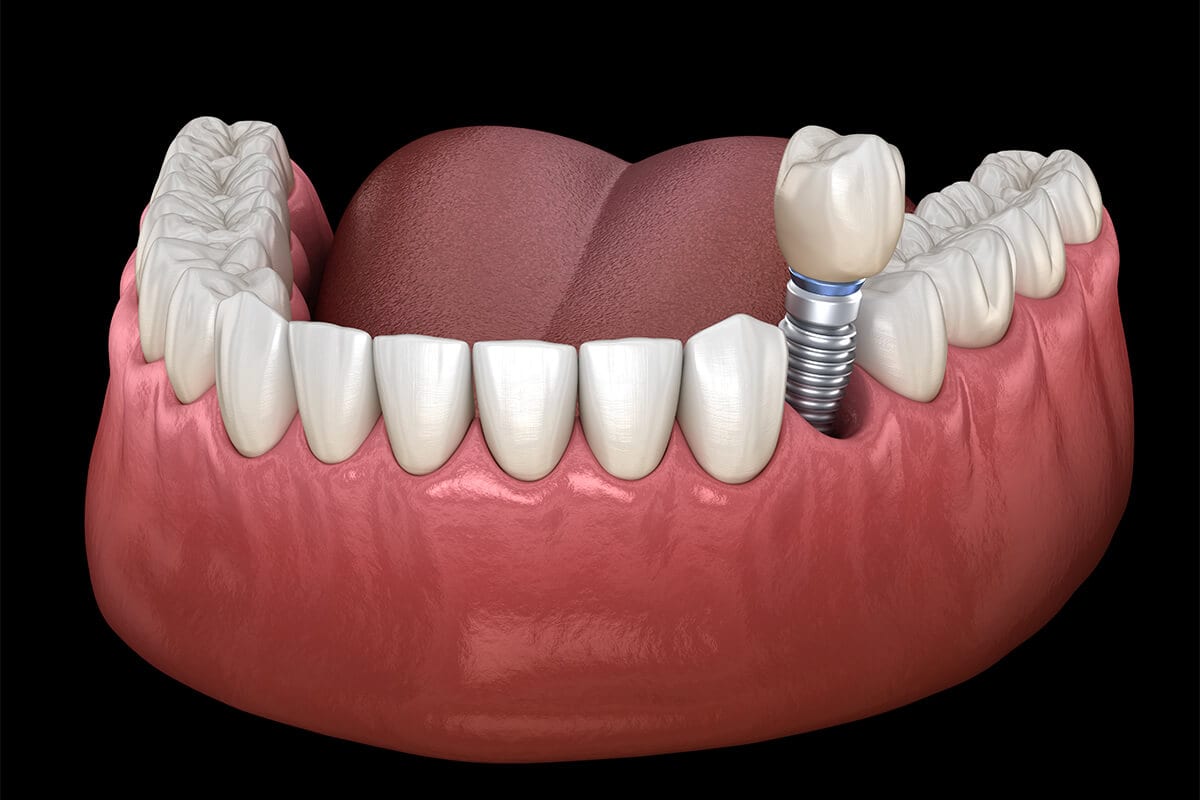
Implant-supported dentures are the most advanced option available today. They attach to small titanium implants that fuse with your jawbone through a process called osseointegration. This creates a foundation that feels and functions much like natural tooth roots.
There are two common styles of implant dentures. Implant-retained dentures snap onto implants and can be removed for cleaning. Fixed implant dentures are permanently secured and can only be removed by your dentist. Both styles offer dramatically improved stability over traditional dentures.
The process for implant dentures takes several months from start to finish. Implant placement is a minor surgical procedure performed under local anesthesia. After a healing period, the denture is attached to the implants for a precise, comfortable fit.
Good candidates for this option have adequate bone density and healthy gum tissue. If bone loss has occurred, a bone grafting procedure may be recommended first. Patients with certain health conditions may need clearance before implant surgery.
It is also worth knowing that implants protect your jawbone from the bone loss that typically follows tooth extraction. This preserves your facial shape and makes implant dentures a long-term investment in your oral health. In some cases, patients exploring implants may also need to address underlying issues like decay first — including Root Canals — before moving forward with implant placement.
Comparing Your Options: Which Denture Is Right for You?
Deciding between full vs partial vs implant dentures in Cambridge requires looking at several personal factors. There is no one-size-fits-all answer. Your dentist will evaluate your oral health, bone structure, and overall goals before making a recommendation.
Here is a quick comparison to guide your thinking:
- Full dentures — best for complete tooth loss in one or both arches
- Partial dentures — ideal when healthy natural teeth remain and cost is a factor
- Implant dentures — best for patients who want the most stability and permanence
Your lifestyle also plays a role. Patients who are very active or who speak publicly may prefer the security of implant-supported options. Patients focused on simplicity and accessibility often find partial or full dentures meet their needs well.
Schedule a consultation with Dr. James Tse at Prospect Dental Group Cambridge. A thorough exam, including X-rays and a review of your dental history, will give you a clear picture of which option suits you best. You deserve a solution that fits your life — not just your mouth.
Frequently Asked Questions
How long does it take to get dentures in Cambridge?
The timeline varies by denture type. Traditional full or partial dentures typically take four to eight weeks from your first appointment to final fitting. Implant-supported dentures take several months because the implants need time to fuse with the jawbone. Your dentist will give you a personalized timeline at your consultation.
Are implant dentures worth the extra cost?
For many patients, implant dentures are a worthwhile long-term investment. They preserve jawbone, offer superior stability, and can last many years with proper care. Traditional dentures may need replacement or relining every five to ten years. Your dentist can help you weigh the long-term value based on your specific situation.
Can I eat normally with dentures?
Most patients can eat a wide variety of foods with dentures. There is typically an adjustment period, especially with full dentures. Implant-supported options provide the closest experience to natural teeth when chewing. Starting with softer foods and gradually reintroducing firmer ones helps you adapt comfortably.
How do I care for my dentures?
Removable dentures should be cleaned daily with a soft denture brush and mild cleanser. Avoid regular toothpaste, which can scratch the surface. Soak them overnight to keep their shape and give your gums a rest. Implant-supported dentures require brushing and flossing around the implant posts just like natural teeth.
What if my dentures stop fitting properly over time?
This is very common. Your jawbone naturally changes shape after tooth loss, which can cause dentures to loosen over time. Regular dental checkups allow your dentist to monitor fit and recommend relining or a replacement when needed. Do not try to adjust or repair dentures at home, as this can damage them.